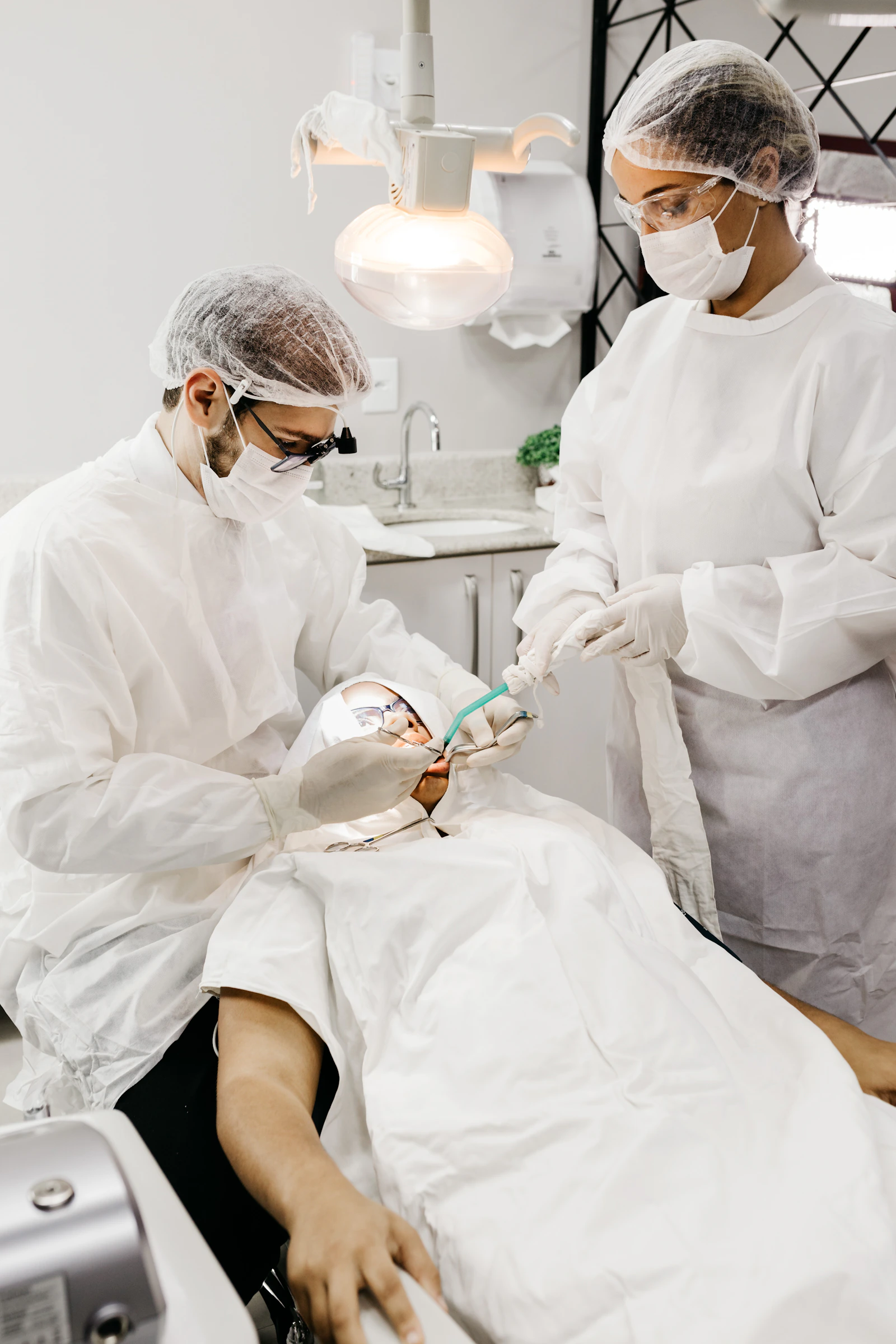
Root Canal Therapy
Saving the tooth, ending the pain
What it
actually is
Inside every tooth is a narrow chamber containing nerve and blood vessels. When deep decay, a crack or trauma allows bacteria into that space, the tissue becomes irreversibly inflamed or infected — and because it is sealed inside a rigid structure, the resulting pressure produces the specific, relentless pain that people describe as the worst they have experienced.
Root canal therapy removes that infected tissue, disinfects and shapes the canal system, and seals it so bacteria cannot return. The tooth stays in your mouth and keeps functioning. The alternative is extraction, which then requires an implant or bridge to fill the gap.
The procedure's fearsome reputation dates from an era before rotary instrumentation, rubber dam isolation, operating magnification and modern anaesthesia. Today the overwhelming majority of our patients report the appointment was less unpleasant than the toothache that brought them in — and the relief is immediate.
Why patients
choose it
Immediate relief
Removing the inflamed tissue removes the pressure. Most patients feel dramatically better the same day.
Keeps your tooth
Nothing artificial matches a natural root. Saving the tooth avoids implant surgery entirely.
Stops the infection
Prevents spread into the jaw and the systemic complications untreated abscesses can cause.
High success rate
Well-executed root canal treatment succeeds in over 90% of cases long term.
Protects your bite
Keeping the tooth prevents the drifting and over-eruption that follow an extraction.
Step by step
Diagnosis
Sensitivity testing and X-rays — sometimes 3D imaging — to confirm which tooth and how far the infection has travelled.
Anaesthesia & isolation
The tooth is thoroughly numbed and isolated under a rubber dam, which keeps the working field sterile and dry.
Cleaning & shaping
Under magnification, flexible rotary files remove the infected tissue and shape the canals while irrigants disinfect the system.
Sealing
The canals are filled with a biocompatible material and sealed so bacteria cannot re-enter.
Restoring the tooth
A root-treated tooth is brittle. A crown is almost always fitted afterwards to prevent fracture.
What to
expect after
- Tenderness to biting for two to four days as the surrounding ligament settles.
- Over-the-counter anti-inflammatories are usually sufficient; we will tell you if antibiotics are genuinely indicated.
- Chew on the other side until the permanent crown is fitted.
- Contact us if swelling increases after 48 hours rather than reducing.
- A follow-up X-ray at six to twelve months confirms the bone has healed.
Same-day emergency slots
We hold appointments open every day specifically for acute pain.
Magnification and rubber dam
Not optional extras here — they are the standard of care on every case.
Pain first, plan second
Dr. Bennett treats the pain before discussing anything long-term.

Frequently
asked
Does it hurt?+
The procedure itself should not. With modern anaesthesia the tooth is fully numb, and the pain you arrived with is what we are removing.
How many appointments?+
Most front teeth and premolars are completed in one; complex molars sometimes need two.
Why do I need a crown afterwards?+
A root-treated tooth has lost its internal blood supply and structure, making it prone to splitting. The crown is what makes the treatment last.
Should I just extract it?+
Occasionally that is the right call, and we will say so. But an implant costs considerably more and no replacement performs quite like your own root.